Nuclear engineering
Hepenix Nuclear Pool Manipulator Simulator (Prototype)
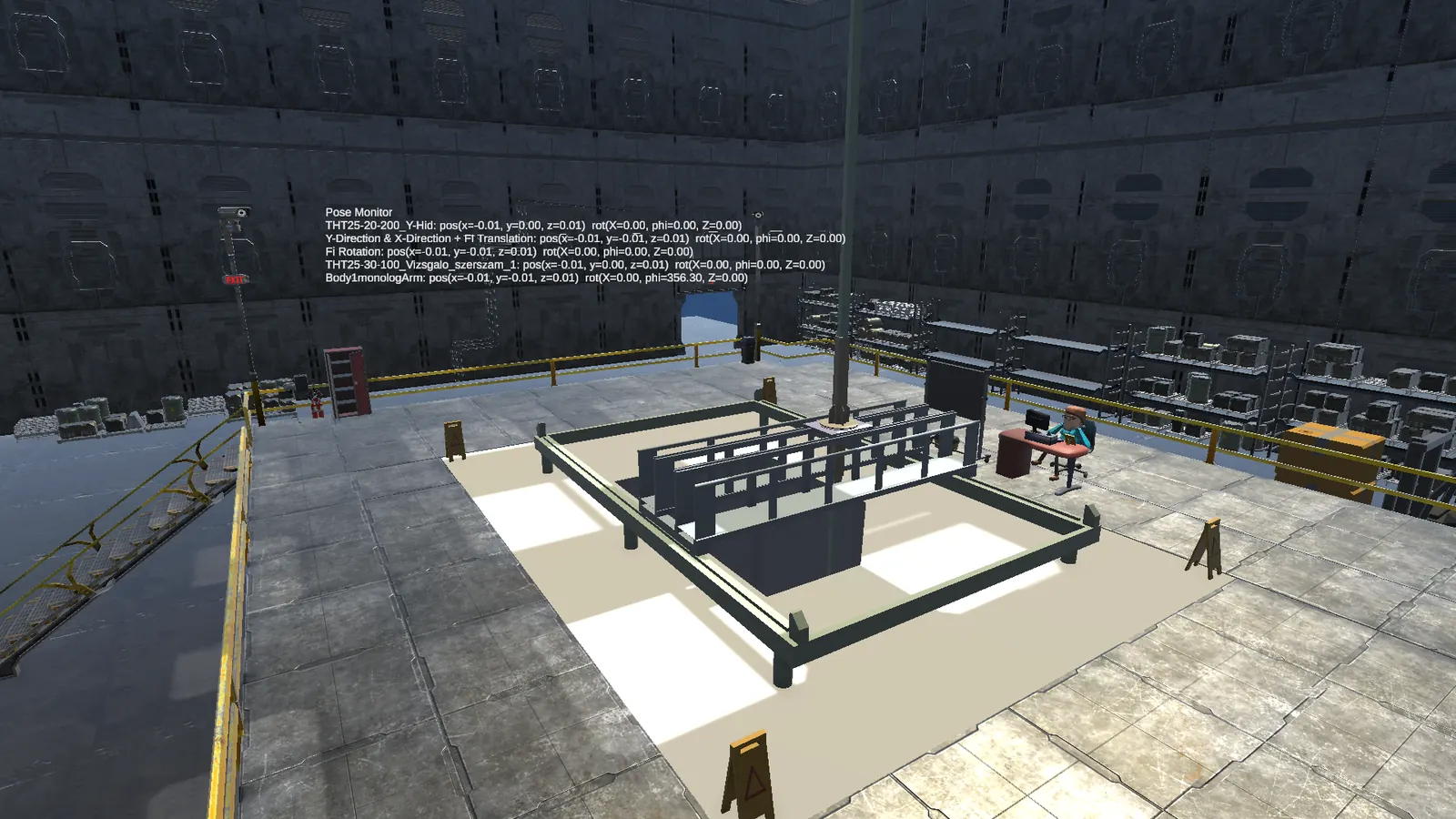
A real-time simulator of a nuclear pool manipulator, with physics and control integrated so operators can train and engineers can test before touching real hardware.
Mission profile
- Degrees of freedom
- 4 (X, Y, Z, Fi)
- Simulation engine
- Unity, real-time
- Frame rate
- 60 to 120 fps
- Positioning accuracy
- Sub-millimetre
- Architecture
- Modular, additive scenes
- Camera views
- Multi-viewpoint with HMI
What this actually is
Spent nuclear fuel is stored underwater. The pool is not decoration: several metres of water absorb radiation while still letting operators see what they are doing, so the fuel can be moved and inspected safely from a platform above the surface. Nothing down there can be touched by hand, which means every operation is carried out by a manipulator, a rigid and precisely controlled arm that reaches into the pool and handles material on the operator's behalf.
That makes the manipulator a safety-critical machine. It must move exactly where commanded, never exceed its permitted envelope, and never collide with the pool structure or the fuel racks. The consequences of a mistake are severe and the hardware is expensive and often radiologically controlled, so operators cannot simply practise on the real system, and engineers cannot casually test new motion logic on it either.
This is where simulation earns its place. A high-fidelity digital model of the manipulator and its pool lets operators build competence, and lets engineers validate motion limits, control response and failure behaviour before anything is attempted on real hardware. The same techniques underpin remote handling in space robotics, deep-sea intervention and any setting where a person directs a machine through an environment they cannot physically enter.
Overview
I developed a real-time Unity simulation of a nuclear pool manipulator, replicating a 4-DOF industrial manipulator working in a constrained, highly controlled environment. Each axis (X, Y, Z and Fi) has independent motion control with defined limits, so the manipulator stays mechanically realistic and never leaves its workspace. A custom diagonal wall-following constraint keeps the arm aligned with the pool barrier without clipping through geometry.
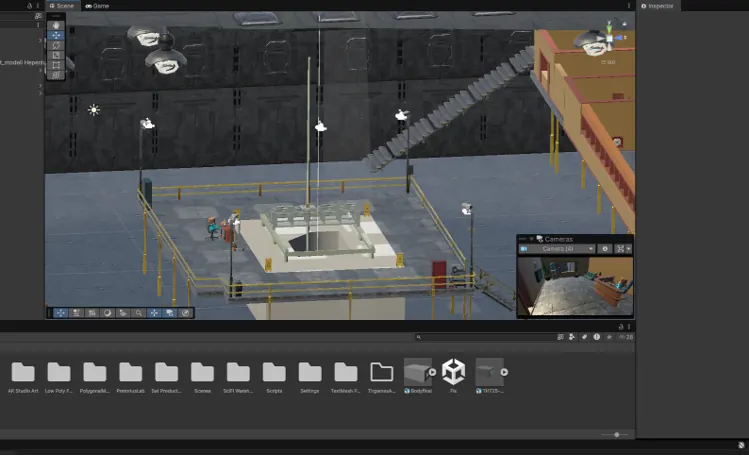
The simulator uses a modular architecture with additive scene loading, so pool configurations can be swapped at runtime without restarting. Multiple camera viewpoints give operator-focused and validation views, and a streamlined HMI overlay lets users switch cameras and environments from a simple menu while the simulation keeps running smoothly.
Role
Head and lead design engineer
Worked with nuclear engineering specialists and the control systems team.
Key requirements
- Real-time physics simulation
- Multi-axis manipulator control (X, Y, Z, Fi)
- Simulated radiation safety protocols
- Precision positioning
Approach
- System requirements analysis
- Physics engine integration
- Control system design
- User interface development
- Validation testing
Engineering notes
Tools
- Unity (C#)
- ROS
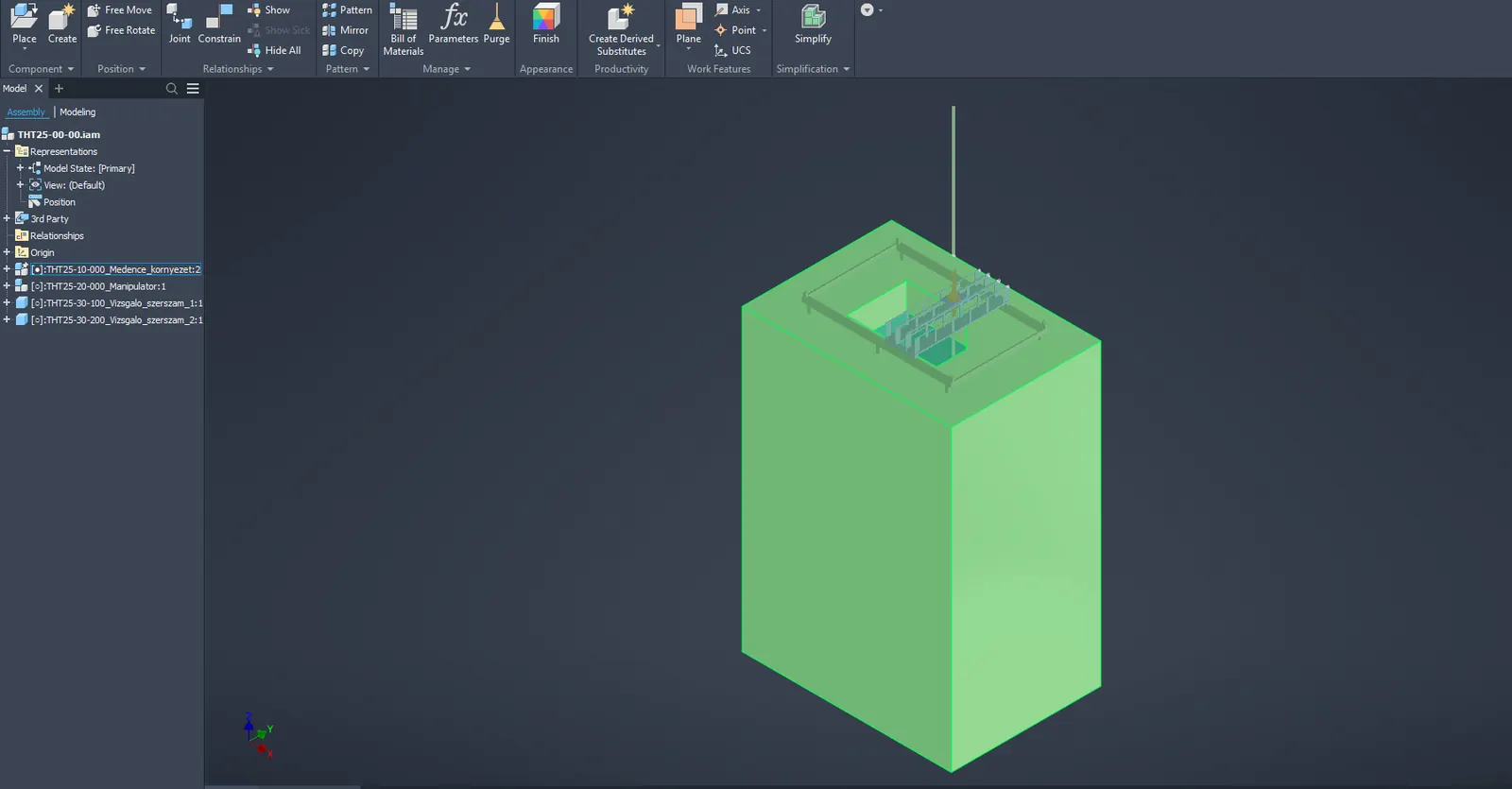
- SolidWorks
- MATLAB
- Python
- Assumptions
- Ideal actuator response, simplified radiation effects, perfect sensor feedback.
- Limitations
- Computational performance constraints and simplified environmental interactions.
- Validation
- Position accuracy testing, control response validation and safety protocol verification.
Results
- Sub-millimetre positioning accuracy
- Real-time simulation at 60 to 120 fps
- Integrated safety monitoring system
- Training time reduced by 70%
Deliverables
Complete simulation software, user manual, technical documentation and training materials.